


Pre-treatment for decoration
By applying various hairline and spin finishes to the raw surfaces of aluminum or stainless steel, it is possible to create three-dimensional decorative effects through silk-screen printing and etching.
By applying processes such as etching or screen printing to materials that have undergone base treatments like hairline or spin finishing, we can create high-end decorative effects that set our products apart from the competition.
Hairline finish
- Fine-line pattern
- It is possible to apply any desired design by combining it with masking printing.
- The finish varies depending on the media used, such as wire brushes or Scotch-Brite pads.
Even a simple hairline finish like this transforms the material into a premium-grade one.
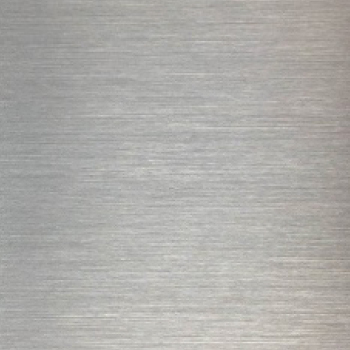
General HL:Llinear pattern HL
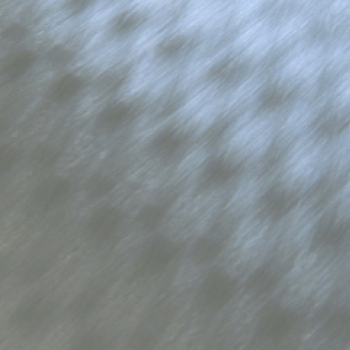
Arranged at staggered levels
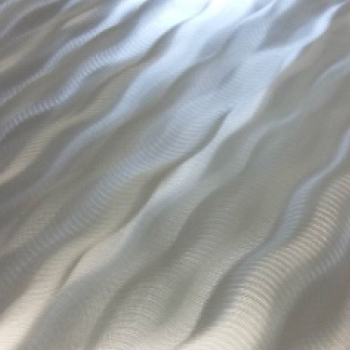
Floating HL
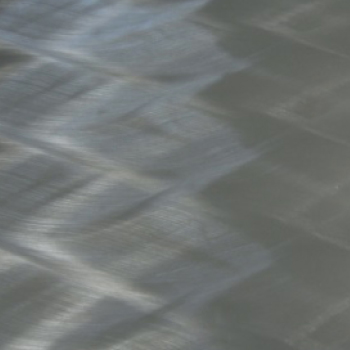
Diamond shape HL
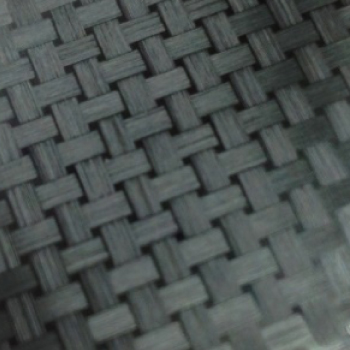
Pattern executed in two directions—vertical and horizontal
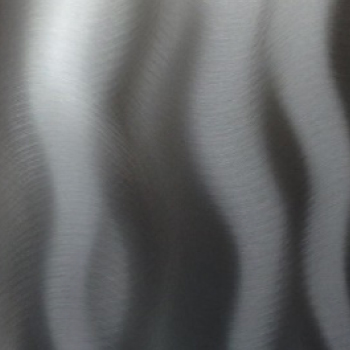
Scramble HL (SHL):strong metallic luster
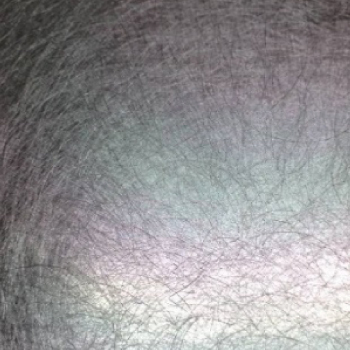
Vibration HL (VHL):It looks like washi paper
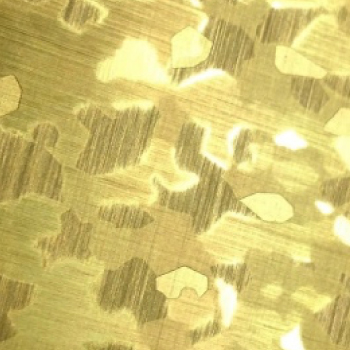
2 directions HL:A composition of patterns layered both vertically and horizontally
Spin finish
Unlike hairline finishing—which employs softer tools like wire brushes—spin finishing is a technique that processes the material by rotating a grinding stone. Like hairline finishing, it offers a wide variety of patterns. The texture and appearance can be altered by adjusting parameters such as the rotation speed of the grinding stone and the speed of its movement.
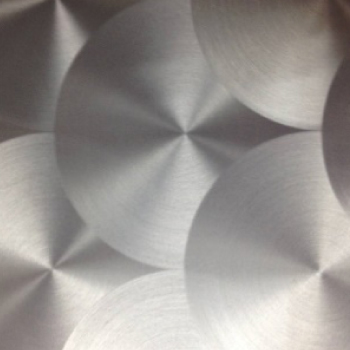
Scale spin:Pattern created by repeating single spins
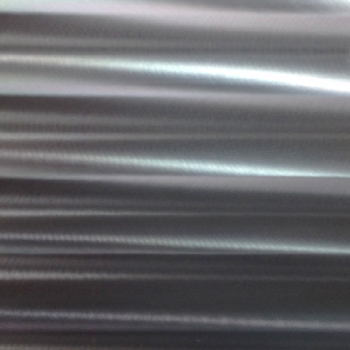
Slide spin (SSP):A spin shifted laterally
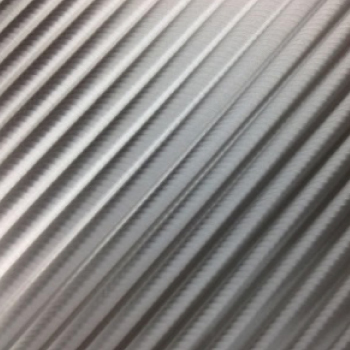
Slide spin:A spin along a straight trajectory
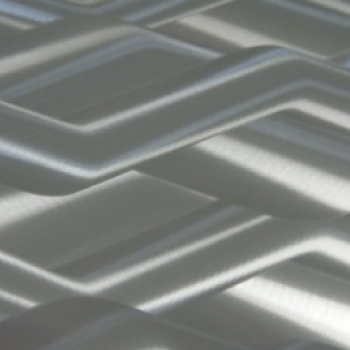
L-shape spin:A series of spins forming a L-shape
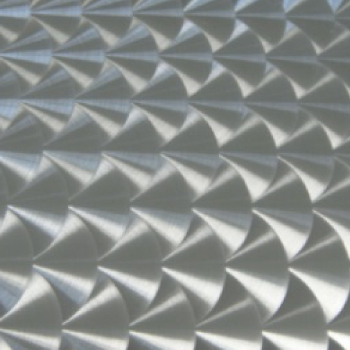
Layers of spin applied in a scale-like pattern:Create a sense of three-dimensionality and depth
Chemical processing
Chemical processing involves using chemicals to treat the surface of a material—for example, through processes such as chemical polishing or dissolution. The following methods are examples of chemical processing:
- CS (Chemical satin):A matte finish that retains a slight sheen.
- CP (Chemical polishing):Gloss finishing via chemical polishing.
Chemical processing is categorized into "general pretreatment" and "decorative pretreatment." General pretreatment includes "mechanical treatment"—which removes surface scratches to achieve a uniform finish—and "chemical treatment"—which removes oil, dirt, and impurities from the surface. Decorative pretreatment not only removes surface impurities but also utilizes specialized chemicals to enhance gloss, create a matte finish, or employ techniques like selective etching to achieve surface effects unattainable through mechanical processing alone.
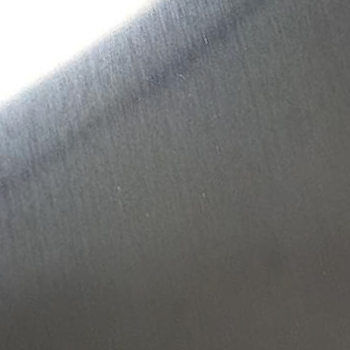
CS sample

CP sample
Sandblasting
Sandblasting is a technique also used on glass products. It is a decorative process that involves propelling media—such as sand, iron powder, alumina, or resin—against the product. By combining this with masking printing, custom designs can be applied. It is also used to eliminate scratches, as it can hide minor surface marks.
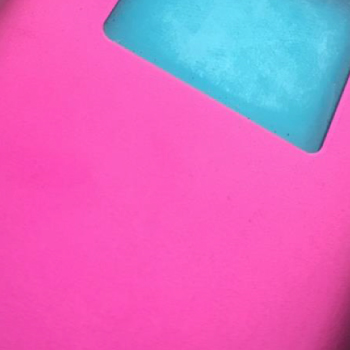
Sandblasting
