


Screen printing
There are four types of printing plates: relief, planographic, intaglio, and stencil. Screen printing utilizes the stencil method. A screen—typically woven from fibers such as polyester—is used for the plate; the screen is stretched and secured within a frame, and a stencil layer (resist) is applied to block the mesh openings in areas other than the desired image.
Then, when printing ink is placed within the frame of the screen and a squeegee is used to spread it, the ink passes through the screen where there is no resist and transfers onto the substrate. This process is known as screen printing.
A key feature of our high-definition screen printing is the ability to overlay up to four layers with a positional repeatability of within ±0.1 mm, achieved through automatic alignment correction using CCD cameras; this enables the creation of high-definition patterns featuring a wide range of colors through multi-color printing.
Aluminum / stainless steel decoration
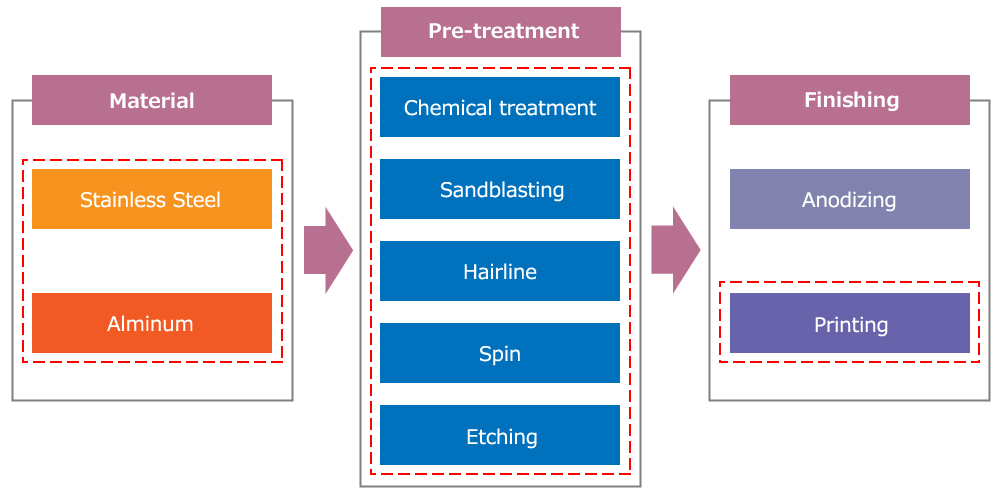

Samples
Examples of high-definition screen-printed products include automotive components such as door waist moldings, door grips, and engine covers. Typically, printing on sheet material followed by press forming results in a degradation of print quality; however, by combining our printing expertise with advanced mold and press technologies, we have made it possible to mass-produce parts without compromising print quality.
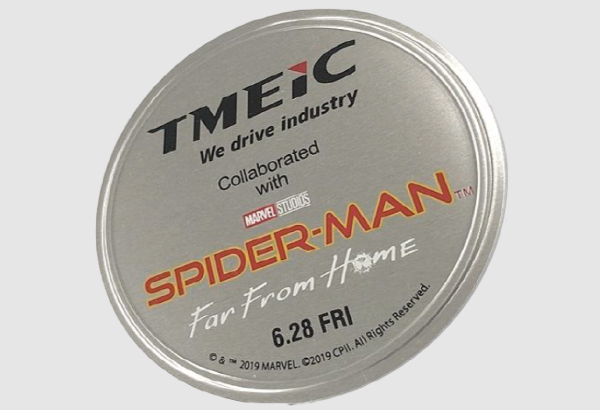
3-color screen printing
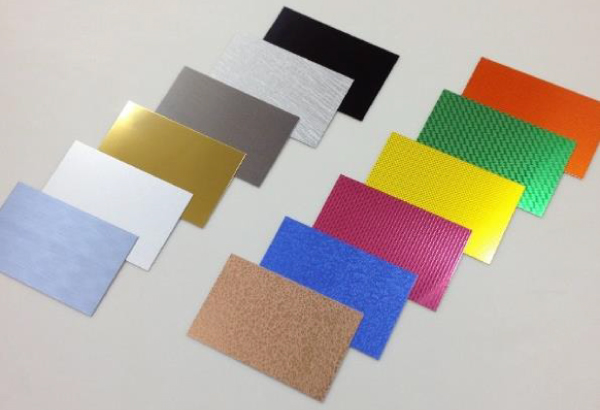
Fine-textured, diverse patterns by layered printing
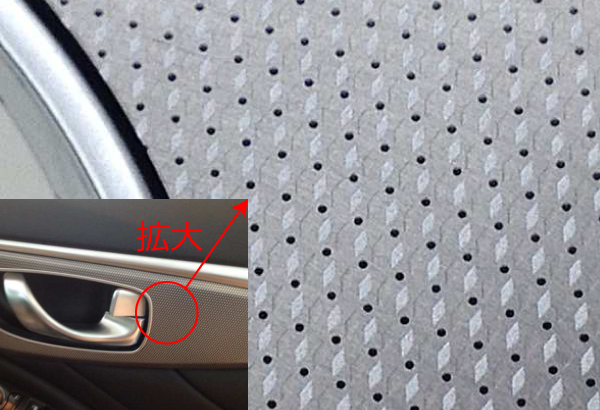
Layered printingon the door grip area
Equipments
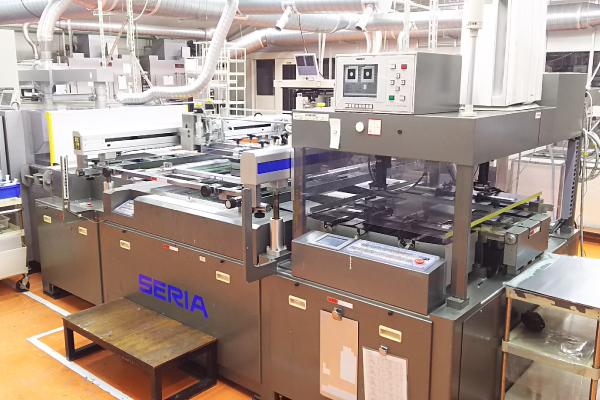
Auto printing mach. with CCD Camera
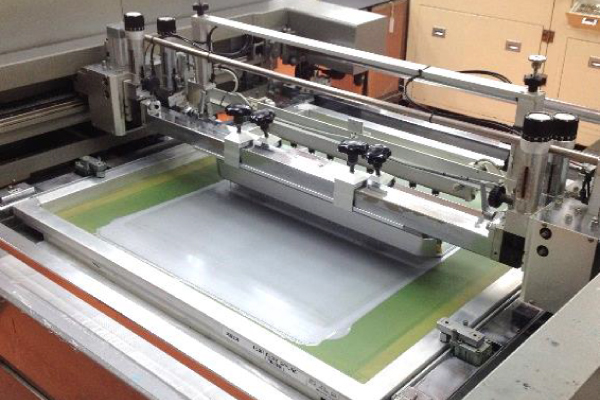
Screen printing machine